If There Is a God

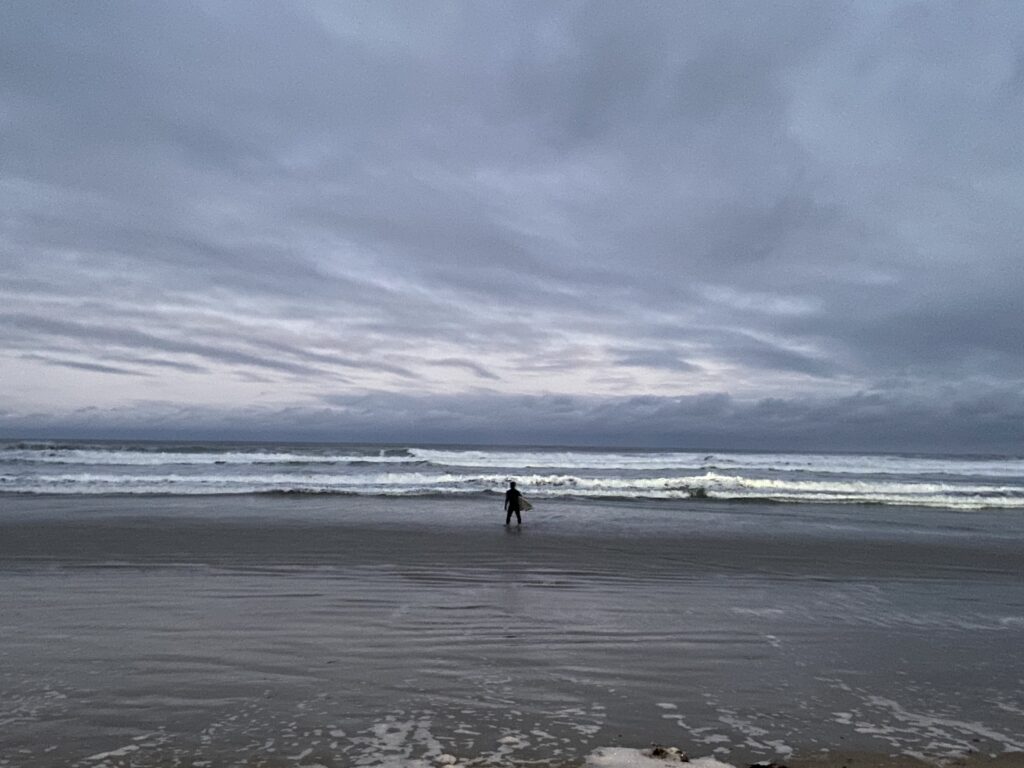
Creation and a crazy night surfer – Photo by Dan Steven Erickson

Maybe I’m being too loose, too open. Perhaps this idea that there are no rules is too much. What would God say? What would Jesus do? If there is a God, I believe he/she would agree 100%. That there are no rules to creativity.

Think about it. In the biblical story of Genesis, God didn’t write an outline first? Did he/she make a plan and a checklist? No. According to the story, God just made the world and declared that it was good. God made everything without any rules set in place. That’s creativity.

I titled this post if there is a God for reason. The more I live, the more I see randomness in this world. The good guy dies young. The evil villain lives on. The frog eats the cat. The older I get the more I see that the world is unfair. Dare I say that many humans have suffered much more than Jesus himself?

This increasingly makes me question the existence of a higher being.

But if God has no rules for creation, it starts to add up. Having no rules is messy, but that’s creativity, it’s life.

Perhaps we just need to rethink everything about God, heaven, and hell, about life. Because he/she made this world without rules. And that’s how we should aspire to become as creators. We are all little Gods, our works are our creation, and there are no rules. – dse

Why Ethics Matter in Creativity

You might assume that being creative gives one free license to say and do whatever they want. It does to an extent, but here’s why ethics matters in creativity.

If I make what is supposed to be a legitimate claim about my creative work and it’s not true, I lose the trust of my audience. I could also face legal repercussions.

People know the difference between fiction and reality and we’re allowed a lot of creative freedom as artists. But outright lies or misleading information is not acceptable.

Fluff or puffery is also acceptable. Whether you like it or not, advertisers do it all the time. I could say I’m the best songwriter in the world. We all know that’s not true, even if I am pretty dang good.

The FCC and the FDA allow fluff. Statements that can’t be definitively proven or disproven such as, “We’re the Best,” and “Our Sauce Is Creamier,” are acceptable. But if you falsify a claim and suggest that a new medicine cures the common cold, you will be fined and required to post disclaimers. Just ask Listerine and Airborne.

If I claim I’m going to give you something for free and then charge you $50, that would be dishonest, unethical. If a grocery store prices a loaf of bread at $2.99 and then charges you $5.00 you might complain if you noticed. Right?

If a hosting plan claims a website gets more than 5000 visits in a month, but the more reliable service of Google Analytics claims the site gets less than 500 visits a month, the host’s claim is more than fluff, especially when the hosting company’s prices are based on those statistics. That would be unethical and concerning. Especially, if the problem has already been reported and nothing has changed. Right?

Once you’ve lost trust with your audience as a creator you are in danger of losing them forever and the word might get out. Your entire creative life could be ruined, your business could fail.

If you think ethics doesn’t matter in creativity, you’d better think again. – dse

Too Many Rabbit Holes

I recently signed up to start writing at SubStack. It seems like a great platform and I’m excited about the possibilities, but it leads me to wonder. Why another platform? What will it lead to? Is it just another of too many rabbit holes?

Over the years, most of us have watched social media, blogging, podcasting, vlogging, etc. change so fast it’s hard to keep up with. From the time I wrote my first book, A Train Called Forgiveness, I’ve played the game.

I’ve done everything I could to promote my book: Facebook, Twitter, and then a WordPress blog. Since, it’s been a plethora of new media and blogging platforms, one after another. With each new platform there’s the hope that maybe this one will help get my work recognized. And with each new platform it feels like I’m at the bottom of the Grand Canyon screaming to be heard.

Should I expect anything different at SubStack?

Due to a glitch, I lost my email list at MailChimp a few years ago. I never started a new list. It all seems like busywork. I’m back at square one.

There are too many rabbit holes in the world of social media and marketing. I’ve gone down at least a dozen. I’ll keep my new SubStack account for now.

I’ll try to slowly build an audience. But there’s another part of me that not only wants to delete SubStack before I go any further, but also wants to delete every other account I’ve ever created except Facebook, BandCamp, and this website.

Still, nothing ventured, nothing gained. – dse

What To Do When You Screw Everything Up

I screwed up.

I spent seven years building blogs and an audience. Then I threw it all away. So, it’s back to square one.

What do you do when you screw everything up?

A few years ago I got so fed up with this online world of trying to promote my work and myself that I did a major housecleaning. I deleted most of my social media. I tried to clean up my mailing list and lost the whole thing. I screwed up.

Then I found a new hosting service, let all my old blogs die and started this one. When I started this one, I had a plan. My plan was well-intended but stupid. Here are some of the things it included:

  • No blogging (just a showcase)
  • No photos (later changed to no stock photos)
  • No newsletters
  • No share buttons
  • No popups
  • No sidebar
  • Less clutter
  • Less links

My goal was simply to make this website a place where readers and listeners could sample my creative work. Well, I screwed up.

By giving myself so many limitations, I essentially abandoned most of my old audience. This site’s stats have taken a huge dive. Past websites I’ve operated were getting upward of several hundred visits a day. Here, I’m lucky to get a handful of visits.

I screwed up.

So what do you do when you screw everything up? Admit you screwed up and start over.

That’s exactly what I’m going to do here. It might be too late with the traditional blogging format losing favor to audio and video formats. But it can’t hurt to try. While I plan to continue to keep things simple, you’ll be seeing a few changes to the site this year.

  • Newsletter/email list
  • More frequent posts
  • Simple share buttons
  • Less photos but only my own

I still love the minimalist approach to blogging. So the site won’t look much different. But I will be sharing more content. I also may experiment with audio and video in the future.

The bottom line is simple. The build-it-and-they-will-come mentality is dead in today’s overcrowded digital space. When I limited myself to bare bones, I screwed up. So what do you do when you screw up? Fix it.

I’m not sure what that will look like exactly, but I do know that I want to be here for you, to serve my audience and teach you more about being a creator. – dse

No Rules

I know you want to understand how creativity works. You want answers. You want something definitive. I’m sorry. There are no rules.

Of course there are frameworks and guidelines involved in any genre of writing, art, music. Still, there are no rules.

There’s a problem with rules in regard to creativity. They never work. If you tell me I must write the verse to a song in a certain way, then all verses to all the songs will become the same. Can you say pop music? If you say I must frame a photo like this or like that, then photos all become stock photos. They lose something. They’re no longer interesting.

If an online post has a checklist of things it must include, then it’s just another cookie-cutter blog post. If a book has to follow a formula. It becomes a bestseller at a cost. Creativity goes out the window.

It’s taken me 50 years to come to this realization. It’s not easy. I want to say, “but, but… there has to be rules.” But the truth is that there are no rules. And as soon as you start making rules you are limiting your potential as a creator.

This is why I restart again and again. This is why I don’t really know exactly what this website is about. This is why. There are no rules. Creativity is never constant, it’s ever-changing. If you think you’ve got it down. Think again. Creativity leads you, you don’t lead creativity.

Remember. There are no rules. – dse

Medium and SubStack: The Walmart and Target of Blogging?

I started this site as a non-blogging platform, just a place where I’d post my music, my poetry, my thoughts. I wish I could be an absolute non-blogger, but the truth is I often still write like a blogger. But what is blogging today? Medium? SubStack?

Is independent blogging even a thing anymore? I’m not so sure.

Yes, there are still thousands of blogs out there, but more and more writers seem to be moving to sites like Medium and SubStack. I’ve written at Medium off and on for several years. I’m exploring the possibility of writing at SubStack. But something is disturbing me.

Are Medium and SubStack simply the Walmart and Target of writing? Are SoundCloud and BandCamp the equivalent for music creators?

I’ll admit that these sites make sharing your writing and music easier than ever. But just like Walmart kills the “ma and pa” store, Medium and SubStack may, in the end, kill the independent blogger. Does everything have to be based upon large corporate models?

If I had to choose, I’d stay with my own WordPress site, and I will. But I have the freedom to do more than one thing. I love that. It’s not all bad. BandCamp has allowed me a lot of freedom as a music creator. I can create a personalized page and sell my music directly to customers. It’s simple.

I see that SubStack may offer similar freedom to BandCamp. Instead of creating a blog and a newsletter and an email list, etc., in separate places, I can do it all from one dashboard. Perhaps that’s a fair model. Although I’m hesitant, I might give it a try. Slowly. – dse