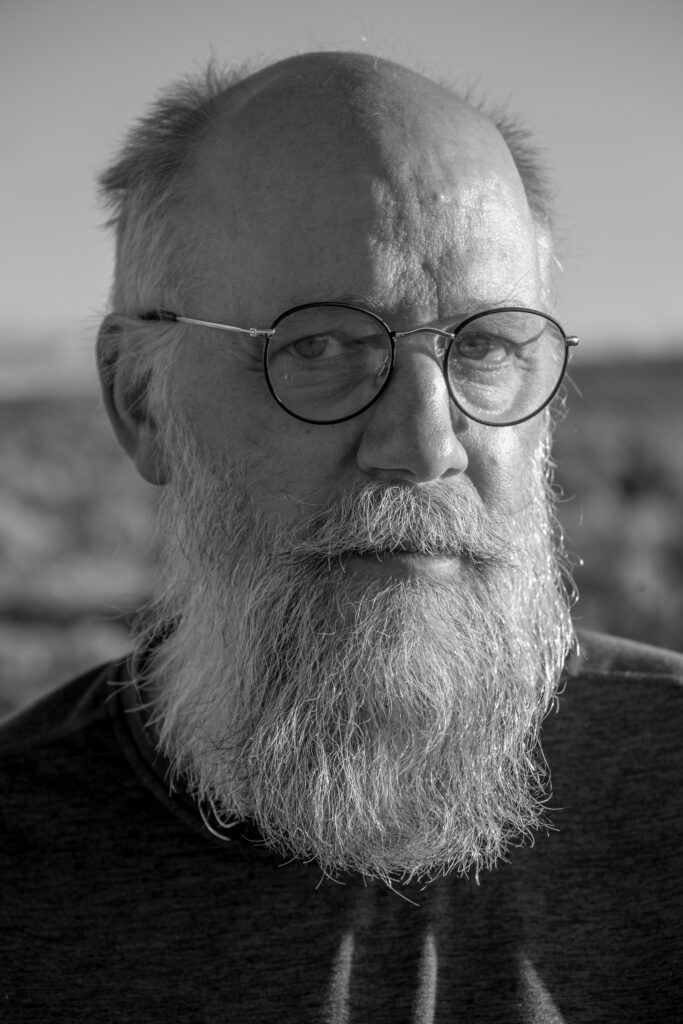
It’s New Year’s Day. 2026. Welcome. Whatever happens.
I’ve hesitated to make resolutions or predictions for several years now. I did set some very loose goals for this year, most of which I’ll reach just by just doing what I do. But if I don’t reach them all and I go off in a different direction, I don’t care. That’s life. And at the age of 62 I’m just taking things as they come.
Every year I see a few kinds of posts regarding the new year.
The optimist post: These are the people who are excited for the new year and focused on making it the best year ever, just like they did the last year, and the year before that. I love their passion, but the optimists often set themselves up for failure. By the end of the year they are complaining about how bad the year was but optimistic about the next one.
The pessimist post: These people look at the new year as if it’s the last one on Earth. They claim the last year was bad and it can only get worse.
The reluctant post: These are the people who are careful to not make any comments on the coming year and they tiptoe into the new year and hope for the best.
And then there are people like me. It’s really just another day. So, I simply say welcome. Here’s to a good 2026. – dse
I started a YouTube Channel in mid-January of this year. I don’t get a ton of views but I’ll post links to my most-watched videos here. The first three links are the most viewed. I’ll follow those with the top-ten most-played songs.
My goal was never to attempt to get views and create a popular channel, but rather simply to catalog songs and post some about songwriting and music.
I posted a total of 199 videos in 2025 and gained 93 subscribers. Again, getting subscribers was not the primary reason for starting the channel. Documenting my own songwriting journey was.
I officially retiredfrom full-time work on December 1. Shortly after I stopped working in early November, I almost doubled my output on the channel. I could keep that up. But I’m not going to. Why?
Although I was tempted to try to start building the channel instead of simply using it for my own space, I’ve decided against that idea for now. In April, I’ll be moving back to Maine. I’ll be busy moving and doing some work on my condo up there. I want to do some traveling. I might go back to work part time. So, I’m not ready to commit to something more than what I’m currently doing on my channel.
That Could Change
I’ve always considered the idea of doing something more with the channel and/or starting a second channel. But I only want to do that if I’ve decided to seriously commit to the project(s).
That would mean that I’d get new and improved equipment, and that I’d create a space specifically as a YouTube studio. I’d study the art of YouTube production and become more deliberate in creating higher-quality work. I’d aim for better video and better audio. I’d learn how to edit. I’d have more scripted videos.
I’m not yet convinced I want to do all that. I need to wait and see what direction life takes after my move back to Maine. Also, a part of me likes the simple lo-fi authenticity of my channel as it is.
So, until mid-2026, I’ve decided to pare back a little and only post a few times per week rather than daily as I did through most of November and December.
I already set my goals for 2026a couple of months back. They are very simple and general. In fact, I’ve already met a few of them and it’s not even 2026 yet. Here’s a review:
10 things I hope to do before the end of next year.
Give my website a simple remodel.
Continue writing and recording songs and music.
Write poetry and consider short story.
Keep walking regularly and participate in other physical activities.
Monitor my health and see experts on my blood condition.
Read on a fairly regular basis.
Consider a second piece of real estate in Kansas or Missouri.
Retire from my current job and move back to Maine.
Create a YouTube Studio in a different location and focus on a few strategies to promote the channel.
Travel and work on becoming a better photographer.
So, #1 is done. #8 is part done. I’ll be taking a photography class starting in January, #10. Many of the other goals are things I simply do on an ongoing basis. See what I did there. I made it nearly impossible not to meet my goals.
There are a few things I want to reevaluate.
Let’s review #2, #7, #9, and add one big thing that I forgot to include.
#2. Continue writing and recording songs and music: Of course, I’m going to continue to do music. The question is at what level? Since I retired, I’ve sped up my output, both in writing and posting to my YouTube channel. I’ve even done some new Anderhill music. I’m not sure I’m going to continue to increase musical output going into 2026. Something is telling me to slow down a bit on the musical output and to focus on quality over quantity.
#7. Consider a second piece of real estate in Kansas or Missouri: This is simply a thought, an option. I often consider real estate in that region for the low cost, and to be close to my first daughter who was stillborn and buried in Joplin, Missouri. But I think in 2026 it will be more important to focus on my property in Maine.
#9. Create a YouTube Studio in a different location and focus on a few strategies to promote the channel: As with #2, I’m not going to stop. However, I’m also not going to put the YouTube channel at a high level of importance. In fact, I’ll be making an announcement on the channel before the end of the year that I will be slowing down output. And chances are fair that I’ll keep the channel simmering on the back burner until after I’ve resettled in Maine. Only then will I decide about the new studio space and the direction of content and promotion.
One important thing I left off the initial list.
I have a small condo in Maine. It’s livable but is also in need of some updates. So, upon my return, I need to start on the process of getting some things done. Here’s a list of things I’d like to consider completing over the next couple of years:
Get electrical and plumbing inspected and repaired.
Get the windows and exterior doors replaced.
Do a partial kitchen remodel and get new appliances.
Get a new shower/tub.
Repaint the entire interior.
Possibly install new flooring downstairs and resurface the stairs.
Replace heating units with new and more efficient models.
Turn the basement area into a YouTube studio instead of a storage area.
Minimize furnishings and decor.
And a few of other things…
Other things I left off my original list because they are not certainties:
Consider getting another dog.
Working part-time either at Cabelas and/or adjunct teaching.
Traveling to Canada, Scotland, and/or Iceland.
So, there you have it. A slightly more specific list of goals for 2026. Again, I do not like to set goals the way I used to. I used to aim too high and set unrealistic goals. I might have met 40% of them. Life is uncertain and keeping your goals loose is a much better option, especially things that are outside of your ability to control.
Don’t set goals you can’t control.
For instance, a few weeks ago, I noticed that my YouTube channel had about 83 subscribers and 180 posts. So, I posted a goal on Facebook. I said by the end of the year I’d have 200 posts and 100 subscribers.
At the rate I’ve been making videos, the 200 posts by the end of the year was very reachable. Still is. But I can’t control how many people subscribe to the channel. It’s gone from 83 to 92 but I don’t expect to reach 100 by December 31. I was setting myself up for failure by making my goals dependent on the actions of others.
This, in part, led me to reevaluate the importance of my YouTube channel. I’ve blogged and I have been caught up in the endless cycle of trying to grow an online presence in the past. I’m not going to let that cycle repeat when I retire. I cannot control the actions of others. I cannot force people to come to my channel. This is not The Field of Dreams.
I started the YouTube channel as a place to catalog songs and discuss things related to songwriting and music, and occasionally, life. I started the channel with no illusions of becoming popular or monetizing. And for now, that’s just how it will remain. And I think I’ll end the year with 199 posts just because I can. – dse
I’ve been thinking a lot lately about the idea of ever “making it” as a songwriter, musician, or writer. What does that even mean? To make it? Then I realized that I already gave up the dream. 100%.
I’ve recently retired and that matters here.
First, I am officially retired from full-time academic work as of December 1, 2025. I’ll have more time on my hands. Time that might allow me to work harder in pursuing my artistic endeavors. And I will.
I’m going to keep my YouTube Channel going. I’m going to keep writing songs. I’ll keep composing ambient music and writing poetry. Maybe, I’ll even write another book. But never again for the reason of trying to “make it.” And only out of the love for the process, and the art.
I work to create a healthy balance in life. I’ll likely continue to do some part-time work. I’m going to do some upgrades to my condo. I’ll travel some. I’ll work more on photography. I might even learn more about how to create a successful YouTube Channel instead of just posting random videos of me singing songs. Who knows? But I’ll decide.
I won’t do any of that in hopes of achieving financial or social success in the industry. Here’s why.
My work is 100% driven by artistic value, not money.
In the past few years I’ve noticed something. I understand that people who have been successful in the music or entertainment industry have worked hard to get there. I also understand that they are busy people. Even those who have not made it, but focus on that commercially-based track to success seem to have similar attitudes toward artists as myself.
They are dismissive.
That’s right. I’ve discovered an underlying unfriendliness among many people I’ve met who have been successful in the music business, or are trying their hardest to make it. I’m not sure exactly why, but I’m going to take a stab at what I think might be going on.
It’s a game of egos, and some people are threatened by purity.
I know some people may disagree, but from clear back in my early blogging days, I noted something. Most bloggers who had already had some success seemed to snub their noses at those who were trying to reach similar levels. Unless you were kissing up to them.
Why? Because their success depended on those who had not “made it.” That’s right. They want you to buy into what they are selling you, their courses, their programs, their coaching. They want you to believe that they are somehow better than you. Even if your raw talent is superior to theirs, they could never admit that. The ego will not allow for it.
I’ve found the same thing within the songwriting and music world. You’re a fan, not a contemporary. I’ve even had the sense that some of the successful artists I have met and worked with in the past few years are intimidated by those of us who have spent our lives mastering the art of something without “selling out.”
When you really think about it, if one has spent 50 years mastering a specific art while the other has had to worry about business, performances, recording, touring, and keeping their base happy, which one has truly had the unadulterated time and space to be more faithful to the art?
Alternative roads are shunned.
I also see that those of us who refuse to take the expected route in the music industry are ignored. The expected route is to spend lots of money to create a product to sell.
In Nashville, you are expected to make a high-quality produced demo. But it wasn’t always that way. Country music publishers used to request nothing more than instrument/vocal demos. Now there is a whole studio industry catering to wannabe songwriters to spend $500 per song.
You’re also expected to play the open mic and songwriting round circuit, and to co-write in an effort to prove yourself to the industry community. The venues where these events happen are selling you hope and dreams and food and beer.
In other words, the songwriters have become the product. The majority of the tens of thousands of songwriters in Nashville will spend thousands of dollars to never make it. I played that game as a younger man. I see through it now.
I think about Woody Guthrie.
Woody Guthrie refused to sell out. Sure, he made a meager living as a songwriter, but he never wrote anything he did not believe in as a means of pursuing commercial success.
Woody stood up for the things he believed in. He simply created whatever he chose. He was never impacted by the lure of success. In fact, he walked off the set when he was expected to play the role of a hayseed and sing commercial songs for a TV show.
Yet, in the end, Guthrie, never really a success in his own right, became a legend, and one of the biggest musical influences for future generations of songwriters.
I’m done dreaming, but I’ll keep on doing.
So that’s it. I’m done dreaming. 100%. But I’ll keep on doing. Or not. I won’t give into pressure to conform. I’m too old for that shit. I’ll write and post what I want when I want. And if I decide to stop doing altogether, that’s my prerogative.
For years I thought I was missing out because I never found much success in my creative endeavors. Now I understand something much more important. I’m free. – dse
I’ve been a creator for my entire life. I started writing songs and plays when I was eight. The first play I wrote was called, Commercial Christmas. I’m not sure how I understood at such a young age that Christmas was an over-commercialized sales event, but I did. And there started my internal battle between art and pop.
My early songs had nothing to do with wanting to write hits. I just thought it was fun, and I used words to express my feelings. My first song, Screaming Mad, was written when I was mad at my mom.
Screaming mad
Close my eyes
Feel like crying
Screaming mad
Close my eyes
Feel like dying
Screaming mad
Throughout my teens, as the child victim of a cult, I wrote songs in my head as means of escape while working as a slave. By then, however, I was dreaming about my songs becoming top-40 hits. I was becoming educated in pop.
We are trained to follow the trends.
The entertainment and media business might just be the biggest enemy of art. Sure, if it weren’t for media, many musicians, writers, and artists would never be known. But when anything becomes mass produced and promoted through a system that reaches the majority of people within a culture, it shapes the art. The art becomes a part of popular culture.
Pop.
When Elvis and The Beatles came on the scene, what did every young American boy want? To become like them. This created imitation. Pop wins. Art takes a back seat.
The majority of my work is simply a mirror.
As a young songwriter in my 20s, my goal was to be discovered. Therefore, I wrote songs I thought would be “hits.” I was basically a mirror of everything I listened to on the radio, a reflection of the musical culture of my time.
As I continued to write, I also continued to discover new music, and old. I went deeper into the past and discovered blues and traditional country. Again, I became a reflection of what I heard. I might have been a mirror to the past, but I was still imitating. And even though I was writing deep country and blues, I still sensed more pop than art.
Even so, through the years, I was becoming an artist in my own right. I didn’t always write with the intent of getting hits, and I didn’t always imitate my idols. I slowly found my own voice in the arena of song. Still, I felt the majority of my catalog was pop. I suppose this has to do with formula. Most songs have verses, choruses, bridges, expected patterns. That within itself feels more like pop than art.
Weird songs, ambient music, and abstract photography.
Sometime in my mid-40s I started to become disillusioned with my songwriting journey. I was tired of writing songs that sounded like all the other songs ever written. Around that time, I also discovered Bill Callahan. His songs were different. They did not follow the formula. So, I wrote a batch of songs that also did not follow traditional songwriting formula. But I was still being a mirror, an imitator.
It wasn’t until I started playing with electronic music programming that I really broke away from formula. I experimented. I became a composer of chaos and drone. Nothing had to make sense. The digital audio workshop was my canvas. Sometimes, I’d recite odd poems over the top of a composition. Or I’d go sample strange sounds and program them into the mix.
I was free from formula. However, in time, I found that even weird music has its own formula, it’s just less obvious. Still, I feel that my work as an electronic music composer has been my strongest art.
Around the same time, in my early-to-mid 50s, I started taking more pictures. Although, I primarily like scenic photography, I also found myself drawn toward taking photos in ways that were very abstract.
Art.
The dilemma.
After about seven years of playing with ambient, drone, and experimental compositions, I returned to more traditional songwriting. It was exciting to feel that old rush of energy when words and music come together. Just as I did when I was younger, I knew many of the songs I was writing had commercial potential. Yep. I was back to pop.
Thus, the dilemma. If you follow media, culture, trends, you regurgitate it. You are part of an echo chamber. You are pop. From an artist’s perspective, that can feel cheap and phony, even if what you’re doing is good. It feels like a product, even if you can’t find buyers.
On the other hand, if you dedicate yourself to things more artistic, many people will not understand your work. They might say, “That looks like a blob. I don’t get it. Can’t you paint a picture?” Furthermore, art almost requires that you turn off the media, walk away from popular culture, ignore trends, isolate yourself, and get lost in your work.
In the end, all of it, pop and art, only has the value we give it as a society, as a culture. Art, however, has one up on pop. Art holds more value to the creator. As a creator, I value my work in which I took more risks, where I was brave enough to allow imagination to override tradition and popular expectation. Although I have had little monetary reward, choosing art over pop creates a greater sense of discovery in the process. It feels more true.
But like most of us, I want to fit in. I want to be understood. I want people to like what I do. And so the internal battle between art and pop continues forevermore. Although, I am giving less shits these days. – dse
Lower Broadway, Nashville – Photo by Dan Steven Erickson
When I was a young songwriter I didn’t see it. I came to Nashville in the early 1990s and played my songs at open mic nights, and among small groups of singer-songwriters at houses and hotels. We were all having fun. Some writers were good, some sucked. I thought I was okay, but I knew I was still a beginner.
Almost 35 years, and well over 1000 songs later, I’m back in Nashville and my perspective has changed. And let me say, from the outset, I’m guilty of what I’m about to say. Songwriters and musicians, maybe artists in general, are often filled with self-importance.
I moved to Nashville in the fall of 2024 with a huge catalog of songs. But I moved here for work, not to play or plug my songs. Then I unexpectedly stopped working at the start of this month. I have a lease until May 1, 2026. So, I decided to go out and mingle among the musicians and writers.
Everyone tends to talk about themselves.
Among groups of songwriters, I’ve discovered that most songwriters spend the majority of their time telling others about themselves, about their songs, their experiences, and skills. I understand that artists need to market themselves, but I note a self-absorption that is slightly off-putting.
Coming from an educational background in communication, I have the ability to speak in public, but I’ve tried to keep to myself and lay low at these musical gatherings. Perhaps that’s a weakness. Or maybe it’s the nature of what I think the #1 tool of a good songwriter is: observational skills.
Other than my closest friends, and people on my social media, very few acquaintances know that I’m a songwriter. And I often consider eliminating Facebook, my one social media. Although, like any artist, I want my work to be seen and heard, I struggle with the whole self-promotion aspect. It feels too self-important. “Look at me!” Instead of spending hours in the bars promoting myself, I’d rather be writing, reading, or hiking.
The pot calling the kettle black.
You might wonder if I lack confidence because I tend to be reserved among groups, including songwriting groups. Upon some self reflection that is definitely not the case. As I said earlier, I can be just as guilty of being self-absorbed as the next. But I also have a long history of songwriting.
I know there are probably thousands of writers who feel this way, but in the past few years I’ve often referred to myself as, “A Great Undiscovered American Songwriter,” with the emphasis on great or American. You decide.
But I say “great” because I have spent a lifetime learning and honing my craft. I have studied the greats. I have stopped trying to be like anyone else and simply do what I do. I don’t care what anyone else thinks. I simply write songs regularly, take ’em or leave ’em.
But does that make what I do important? Not really. Sure, a song could change the world. A song could save a life. Songs can make people happy. They touch us emotionally. They can be therapeutic. But does that mean I’m special or worthy of praise?
I’m just doing something that comes natural to me. It started when I was a child. I heard songs on the radio. I wrote my own. It helped me through six years of being a child victim of a cult. It’s a fun pastime. It’s therapeutic and it has an element of curiosity and discovery. Songs are puzzles. It keeps one’s mind sharp.
But given a choice between spending the rest of my life fighting among the crowded bars and competitive music business (even with a guarantee of success), or simply living my life on my own terms and spending my time doing a variety of things that I love, including songwriting, I’d choose the latter. – dse