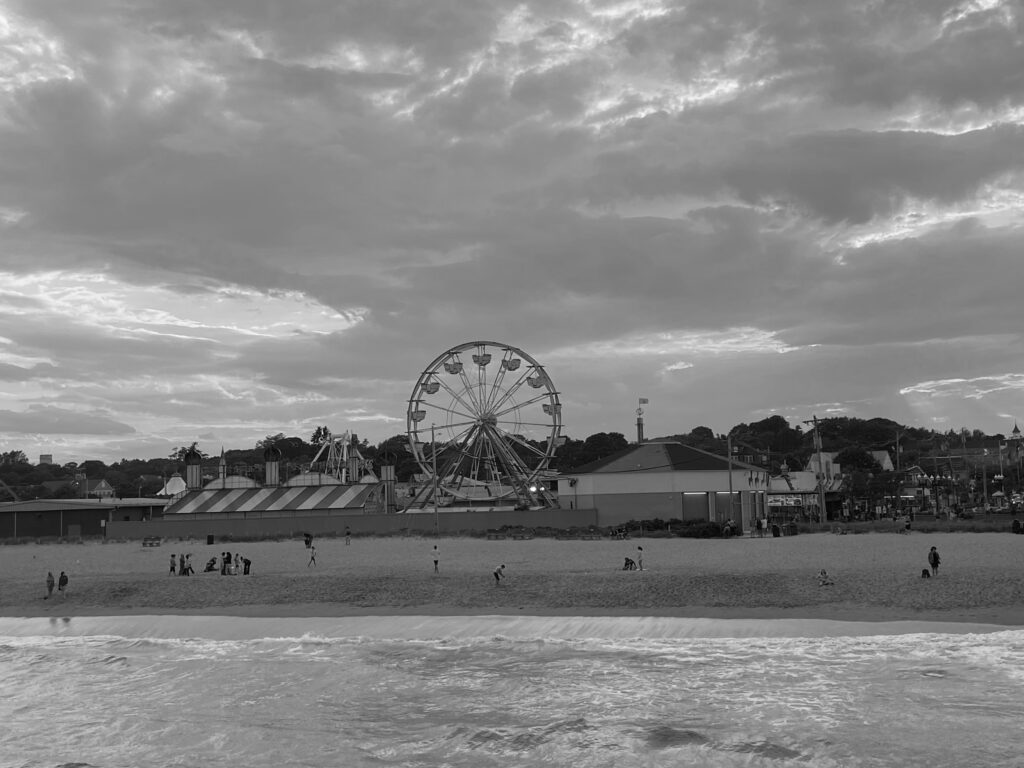
Maine

Old Orchard Beach Maine – Photo by Dan Steven Erickson

My childhood home was in Maine.

I’ve been looking at retirement locations for several years now. I’m not quite ready to retire, but I am ready to find a quiet place where I can start to slow down. Recently, I took a big chance. I bought a small condo in Maine.

I’ve spent some time in Maine and New Hampshire over the years, visiting my grandmother and other relatives. On my last trip to Maine, to bury my late mother, I felt such a deep sense of peace and belonging that I knew it was a place I’d like to explore as I reach the latter part of life.

I’m probably not going to move to Maine permanently at this time, but I will be going there to start furnishing and preparing my 750-square-foot townhouse. I signed the final documents last week. If all goes as planned I’ll stay the winter and possibly the spring. Yes, it’s going to be cold. That’s why I’m going in the winter, to test my resilience to the weather.

I’ll be keeping my place in Washington State for now, but if I feel a connection to my childhood State of Maine, I’ll be selling my property in the Northwest and making a slow transition to making Maine my permanent home.

How will this change my art, my music? It may or may not change anything about it. However, I do like to compose based on location. My goal is to capture the feeling and the essence of a place when I create music and poetry. Photography is something else I’d like to practice more often in the future. Maine is very picturesque. There will be opportunity.

Life is a journey. Creativity is a journey. Both life and creativity are uncertain. I don’t know if I’ll love living in Maine. I don’t know how Maine will affect what I do as a creator. But I’m going to give it a test run and I invite you to follow along. – dse
How to Write a Book

Okay, I’m no expert on writing books, but I have written a few. One thing for sure, it’s not a song. See my post How to Write a Song.

Just as there’s no right way to write a song, there’s no right way to write a book. So, what I’m about to tell you may not work for you. Furthermore, the way I write a book will differ depending if it’s fiction or non-fiction. Let’s start with non-fiction.

When I write non-fiction, it’s all about planning, research, and organization. I create an outline of what I intend to write. Then I pen potential chapter titles based on that outline. I research the topic of each chapter in advance. Then I write and edit a chapter at a time. It’s a very methodical process, and although it’s something I’m fairly good at, I prefer to write fiction. But for me fiction is a totally different process.

Although it’s been several years since I completed my last fictional book, the third of a trilogy, I love writing fiction. Why? Because there are very few rules. When I write fiction it’s all about the story, the development of plot and character. I may sketch out some ideas, but I don’t outline the entire book. That would kill the mystery. Instead, the story unfolds. It’s like driving on a dark mountain road. You never know what’s around the next curve or over the next hill. There is a good combination of contemplation and spontaneity involved.

One thing I make a point to do when writing fiction is to make it move, attempt to write a page turner. There are several ways I work to accomplish this. First, short chapters or sections can soften the threat of reading. I tend to keep chapters short with little cliff-hanger endings. Second, I try balance narration and dialogue. Narration tells the story, but dialogue moves it. A balanced combination is key. Finally, foreshadowing and suspense are two elements that I love to use to help keep readers interested.

There’s a reason I haven’t written a book for a few years. Writing books takes much more commitment and discipline than writing songs or poetry. It takes months, or even years, to write a book vs. hours to days for most songs and poems. Once you commit to a book project, you need to write consistently, several hours a day. That’s something I’ve not had the leisure to do in the past few years. I wrote my trilogy when my daughter was younger. She slept a lot and I took advantage of that time.

Again, there’s no right way to write a book. It depends on the type of book and your own personal preferences. I personally enjoy the process of letting the story unfold as I write.

So, now for the big question? Will I write more books? The answer is not so simple. Life is uncertain. As I move closer to retirement, and as my daughter becomes an adult, it’s my hope that I might write a few more books. In the meantime, I invite you to read some of the titles I’ve already written. – dse

The Cult Trilogy

Poetry

Simple Living Philosophy

How to Write a Song

You ever wonder how to write a song?

As a guy who has written over 1000 songs I might have a few tips. However, I’ll start off by saying that there is no right way to write a song. There are some ways that are more common than others, but that doesn’t make them right.

The biggest question I’m asked about songwriting is this, “which comes first, the words or the music?” And the most common answer for that question is “neither.” In my own experience, and with the majority of songwriters I’ve worked with, the words and music come at the same time. In other words, you sit down at the piano and start playing. Then an idea and a melody start to develop. You work through it until you have a song.

But hold on, the process is not always so perfect. Sometimes it might take me an hour to write a song. Other times it might take three sessions over two weeks to complete the piece. I know songwriters who can spend months or years on a single song. To add to the confusion, you don’t always have to write the words and music together.

In my early years of songwriting I didn’t play an instrument. So, I’d often write lyrics and then bring them to my older brother to set to music. This form of songwriting stuck with me and has especially returned in the past decade. There are some advantages to writing words first.

  1. You can edit and re-edit, even deconstruct and reconstruct the lyric. You can really spend time crafting the lyric into exactly what you want to say.
  2. You have the freedom to apply several, even dozens of chord progressions and musical ideas to the lyric before you settle on the one you think is best.

I’m currently working on a project using the words-first method. I’m spending a few months working on lyrics. This winter I’ll be turning the best of 30 lyrics into an album of songs. Look for more about the new project tentatively titled Waterboro Town Hall in the coming months.

Less often I’ve written music first. To me this is the most difficult way to write a song. There are songwriters who excel using the music-first format, but it’s not my strongest skill. I often feel locked into using a specific melodic structure and struggle to complete lyrics using this format.

Finally, let’s talk about making songs make sense. Beginning to intermediate songwriters often write songs that are weak because they don’t always make sense. One must carefully consider theme, storyline, and context. Pronouns are also important. Sometimes a cool line doesn’t work. Throw it out. Sorry.

On the other hand, sometimes I don’t want a song to tell a story and make perfect sense. In my current project, rather than writing solid story songs, I’m writing songs using related ideas, imagery, and metaphor to weave something together that has a universal meaning but is not a simple beginning-to-end story.

I’m not sure I’ve answered the question on how to write a song. Why? Because there is no right way to write a song. Good songwriters will try many ways of writing songs. Mixing up your process will only increase your skills and creativity. – dse

Accept Uncertainty

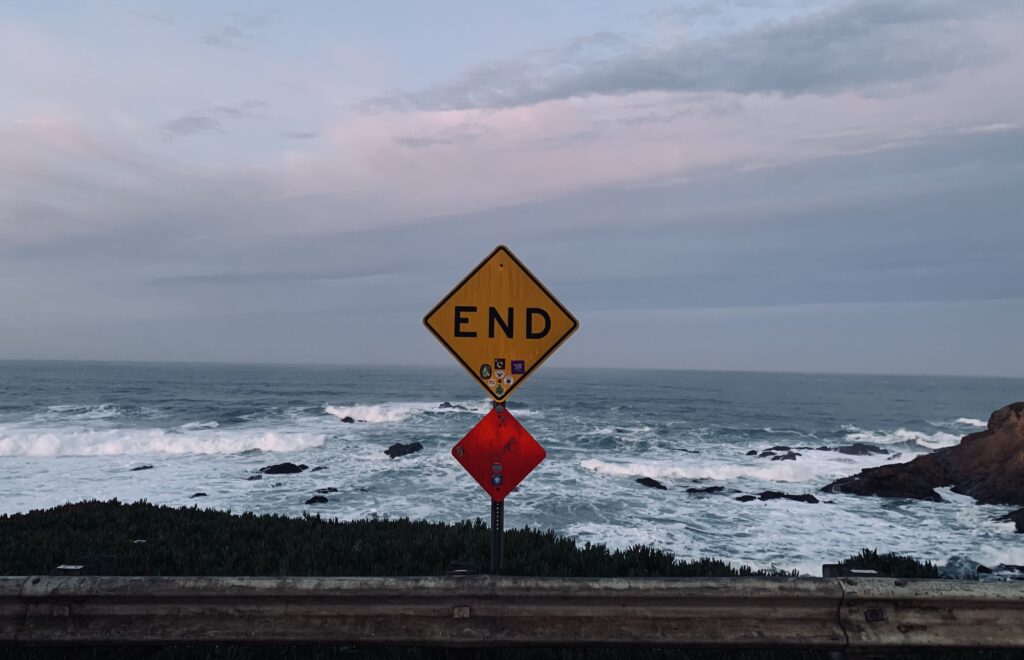
Ft. Bragg California – Photo by Dan Steven Erickson

Recently, I’ve shared some vague pieces of information about some problems that have been occurring in my personal life. The issues are creating some difficulty and uncertainty. Sorry, but that’s about all I can share at this time.

In the future, I may have another book or two that will come from these current problems. For now I just want to elaborate on the power that we can tap into when we accept uncertainty.

Whether in art or life, accepting uncertainty is a key element in staying healthy and productive.

Years ago I saw a psychiatrist, Dr. Fred, when I was going through a divorce and custody battle. I was anxious, depressed, and borderline crazy. The psychiatrist prescribed three things: sleep, food, and fun. That’s right, no anti-depressants or anxiety medication, just the practice of a healthy lifestyle. He said it was no wonder I was experiencing anxiety because I had half a dozen situations in my life that were outside of my control. I had an overwhelming sense of uncertainty.

Dr. Fred’s advice fit me well then and it still does today. I’ll never forget it. Uncertainty is an element of life we all have to deal with, some more than others. I’ve had my share. But not only can accepting uncertainty help us in life, it can help us become better artists and creators.

I’ve been writing music, books, and songs for much of my life. As a novice, I was always concerned about getting things just right, following the rules, and creating the exact content I intended to create. I wanted to be certain that my work was exactly what I set out to do.

However, the longer I live and work as a creator, the more I discover that knowing less about my end results has allowed me the freedom to create as I will. I stopped fighting uncertainty in my artistic endeavors. I just make stuff. If it works it works. If it doesn’t, it might work at a later date. It doesn’t really matter.

I know uncertainty can suck. I’ve dealt with a lot of it. But fighting uncertainty only brings more stress and anxiety.

Accepting uncertainty helps us to overcome the fear that is often associated with it. In fact, uncertainty can be mysterious, adventurous, and fun, even when the situation seems dire.

No one gets any guarantees in life. Don’t fret. Live each moment for now. Accept uncertainty and you’ll find that both your life and your art will be a little more interesting, spontaneous, and enjoyable.

And just like the photo at the top of this essay suggests, sometimes there might be something beautiful at the end of a long, hard journey. – dse

Running

Water down the mountain, joker in the deck
Scraping by catastrophe, cousin’s in a wreck
People on the outside, thieves on the in
I’m stopping for a breath, you’re running again
He used to be a track star, used to be a sport
Followed him on Snapchat, laughing with a snort
Grandpa has a hernia, grandma’s in the grave
Tried to raise you right but you just misbehave

Everybody wants a piece
Everybody’s gunning
Everybody’s waiting
For the second coming
Everybody’s beautiful
Sexy, gorgeous, stunning
Everybody looks the other way
You’re still out there running 

Uncle drives a Cadillac, the faucet’s on the fritz
You’re falling into poverty, dreaming of the Ritz
Consuming more than ever, yet always getting thin
I’m looking for retreat, you’re running again
He promises percentages, pays you in pills
Graffiti tells a story, imagination kills
Doctor’s don’t give a shit, DCR’s are king
Stuck in a hamster wheel, haven’t learned a thing

Everybody has a price
Everybody’s cunning
Everybody’s waiting
For the second coming
Everybody’s innocent
Bums are out there bumming
Everybody looks the other way
You’re still out there running

Drama got the best of you
I’m turning off the show
Worthless politicians
Should be the first to go
Reading the statistics
Two more dead last night
You’re still out there somewhere
But I’m giving up this fight

Everything you touch is hot
Hear the drummers drumming
Everybody’s waiting
For the second coming
Everybody’s ignorant
I hear the blues man humming
Everybody looks the other way
You’re still out there running

Everybody wants a piece
Everybody’s gunning
Everybody’s waiting
For the second coming
Everybody’s beautiful
Sexy, gorgeous, stunning
Now I’m throwing in the towel
While you’re still out there running

Lyrics Copyright 2022 by Dan Steven Erickson

Unfinished

As a poet and songwriter, I have a lot of work that is still unfinished. That’s the way writing works for me. I come up with an idea for a poem or a song and write it down quickly. Sometimes, I’ll write a song lyric in ten minutes before bed or in the early morning. Later, I’ll try to work it into music.

Often, I’ll decide the lyric isn’t strong enough and let the whole idea sit for awhile. Sometimes they become completed songs and other times they simply go into an “unfinished ideas” file.

Today, I’d like to share some words to a lyric I’ve been playing with awhile. The lyric is currently in my unfinished files. The potential song is titled “When Superman Dies.”

Baby, nobody’s gonna live forever
How you ever gonna make it on your own?
If you can’t go five minutes without calling out his name
If you’re always too afraid to be alone
Who’ll be there to rescue you?
When his life here on Earth is through

Whatcha gonna do when Superman dies?
Cause even superheroes fall from the skies
He’s getting closer to leaving this world behind
So whatcha gonna do when Superman dies?

He sacrificed his life when you were young
But now he’s growing weary and gray
He can’t go on living in a co-dependent world
When he feels his superpowers stripped away
Who’ll be there to understand?
You can’t hold onto a dead man’s hand

Whatcha gonna do when Superman dies?
Because every superhero comes to their demise
He’s getting closer to leaving this world behind
So whatcha gonna do when Superman dies?

Now his cape is torn and tattered
And his eyesight’s growing dim
His blood is getting thicker every hour
If you only knew the secret
Of your Superman within
Baby, your weakness is your superpower

Whatcha gonna do when Superman dies?
Cause even superheroes fall from the skies
He’s getting closer to leaving this world behind
So whatcha gonna do when Superman dies?
Don’t look now but he’s fading tonight
What ya gonna do when Superman dies?

Copyright 2022 by Dan Steven Erickson