Brittle Sky

along the cliffs of ancient days
within the cracks: she gazed,
endlessly seeking answers
that would not come.

the tortuous memories
of her past were buried deeper
than the broken glass
that lie upon the surface.

a missing link from a chain,
his was a forbidden name:
false prophet of a brittle sky,
false prophet of love.

he stole her veiled innocence
with deceiving fingers,
false prophet of false pretense
whom she can’t remember.

she walks along a rocky shore
seeking remnants of a cure:
the ocean’s waves,
the broken stars,
the moon in all its fury.

I Shall Wander No More

According to Wikipedia, 8-bit music is a style of synthesized electronic music using the programmable sound generator sound chips or synthesizers in vintage arcade machines, computers, and video game consoles. Think Pac Man and Donkey Kong.

Of course music technology has come a long way since chiptune or 8-bit music, but GarageBand recently added a suite of 8-bit sounds. So for my next Anderhill album, I’ll be using nothing but 8-bit sound technology.

The first track from the album is called “I Shall Wander No More.” Look for a complete album with anywhere from 6-10 tracks (depending on length) by the end of 2023. In the meantime, enjoy the first track. – dse

Sabbatical Update #3

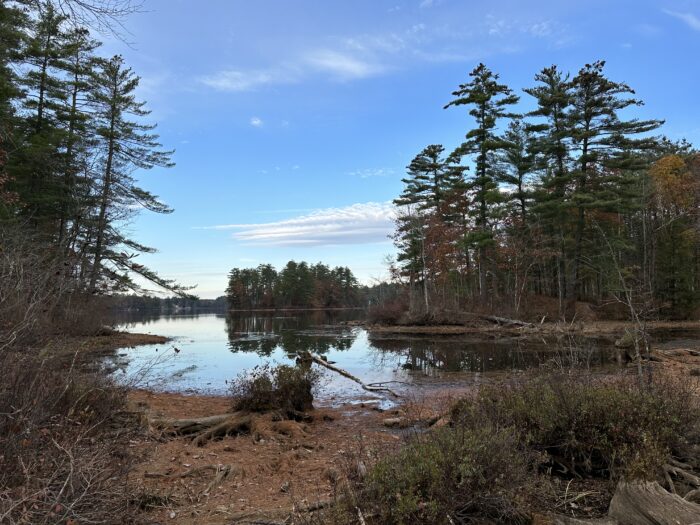
N. Waterboro Maine – Photo by Dan Steven Erickson

The sabbatical project is going well. I’m 33,000 words into the deep edit of my book, A Train Called Forgiveness.

I call it a “deep edit” because it’s not really as much of a “rewrite” as I might have first envisioned. There’s a part of me that would have liked to do a brand new version of the book. That, however, would have been a much larger task than I could complete in three months.

I’m on track to get the rough draft of the new edition of the book completed by early-to-mid December. The biggest change is real names of people and places. Other changes include some additional insight and information to certain content. This draft should be about 5000 words longer than the original.

It’s occurred to me while working on this project that there are so many stories and details that could be included in a book of this nature. I could probably write something twice as long if I chose. However, not only do time constraints keep me from that, I’m also not extremely inspired to rewrite this story.

I lived the story. I already wrote a book about it in which I relived it. I’m kind of reliving it again with this deep edit.

I don’t really want to go back and dig deeper. I want to move forward and into new territory. I’ve already relocated to where I lived in Maine before I was ever deeply exposed to cult leader, Ted Rinaldo. It’s time to close up those old chapters. Unless someone wants to pay me good money to rework and share the story, I’m moving on.

That said, I might add more details and smaller stories about the cult as occasional essays/posts here in the future. – dse

Projects and Processes

I’ve been writing songs and poetry since I was a teenager. In my 30s, I added journaling, academic writing, fiction, and more to my writing bag. More recently, I’ve started creating ambient music and shooting photos.

When I was younger, I didn’t have much of a process for my creative work. I’d get inspired and write a batch of songs. When I could afford it, I’d pick out the ones that I thought were the best and go into the recording studio.

Somewhere along the way, I learned how to do project-based work. I’m not claiming that I don’t still get inspired and just create. I do. But I also have planned projects and processes, a disciplined way of working.

If you looked at the Notes in my iPhone, you’d see a few clear examples of specific projects with folders titled:

  1. Singer-songwriter 22
  2. Blues 22
  3. Ukulele Songs Project 23
  4. Erickson/Graham
  5. 2024, Titles, Verses, Etc.
  6. Rejects and Unfinished Ideas

That’s right, I’m already working on ideas for 2024. One of next year’s projects is to write songs using the electric guitar. This leads me to process.

Here’s how my songwriting process has grown to work.

  1. Create a list of titles. This phase usually lasts a couple of weeks.
  2. Write lyrics without music. This phase lasts from 2-6 months.
  3. Set chosen lyrics to music. This phase lasts another 4-6 months. Some lyrics wind up in the “rejects file.” Sometimes, I resurrect rejects.
  4. Record demo versions of the completed songs.
  5. Start over.

I have similar, but less refined processes for writing poetry and fiction. This year, I’m doing the rewrite of A Train Called Forgiveness for my sabbatical. Next year, I hope to get back to work on another semi-fictional work that I started in late 2022.

With electronic music, I tend to either write during bursts of inspiration, or purposefully choose a block of time to create. I’m due to put some new electronic music out. I might have to go spend a weekend away from home and get it done.

My point is simple. Creative works don’t write themselves. Sometimes inspiration strikes. Sometimes we have to choose to work. I find that working on projects is a great motivator. And the longer I work on creativity in project-based formats, the more refined my processes become. – dse
In Vain

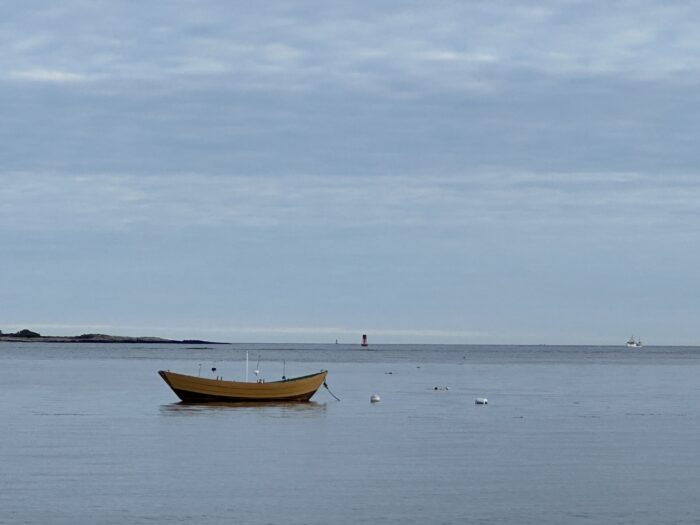
South Portland Maine – Photo by Dan Steven Erickson

Sometimes all of my creative effort feels in vain.

But let’s look at this in perspective. I’m not a vain person. I’m an everyday guy who loves to write and make music. I love to compose and take photos. I love to create.

But what’s the purpose of it all? So what? I’ve written 60 songs in 2023. I’m working on a rewrite of a 50,000 word book. I practice some form of music for a couple of hours a day. Currently, I’m focusing on electric guitar. But to what end?

I believe in my work. It’s valuable. It’s art. But most of it just sits on shelves. Even the books and music that I’ve published barely get seen or heard by others.

The business end of the creative industries is overwhelming. I think about contacting publishers and producers and other industry professionals. I’ve done it before. My experience was that it’s a ton of unenjoyable work for little response. Add the fact that I’m 60 years old and it makes it even more daunting.

So is it all in vain? I suppose it’s better than smoking dope or robbing convenience stores. But seriously, if nothing else, there is personal satisfaction that comes from living a creative life. It kills boredom. It’s therapeutical. It’s fun.

And even if only a few people read or hear something I’ve created, that is some reward. Several people have commented about how my first book, A Train Called Forgiveness, has reached them personally and helped them on their own forgiveness journeys. That’s something, right? – dse

Going Electric?

I’ve played both acoustic and electric instruments for years, but I’ve never really used electric guitar as my primary instrument. Ninety-nine percent of my songwriting has been done on acoustic instruments. That might be changing.

When it comes to music, writing, and songwriting, I like to create projects with parameters. In 2023, my songwriting project was simply to write songs using a ukulele. I did. I wrote 60 songs. And I think some of those songs might be some of my best work to date.

I’ve wrestled with playing the electric guitar for years. I’ve owned several. I’ve played electric guitars off and on for 30 years now. I wrote two or three songs on an electric guitar in the 1990s. Other than that, I’ve been more of an acoustic player. Currently, I own a Mexican-built Fender Nashville Telecaster. And I recently purchased a 2023 American Fender JazzMaster Pro II.

I bought the JazzMaster with a goal: To write a few batches of songs on electric guitar in 2024.

Interestingly, many of the songs I wrote on the ukulele this year lend themselves well to an electric-guitar kind of vibe. That’s what motivated me to buy a new electric guitar.

I’ve contemplated why I’ve struggled to write music using an electric guitar. There are a couple of basic reasons.

  1. It feels like I need a band. You don’t see many solo artists playing an electric guitar as a singer-songwriter.
  2. I need to improve my electric-guitar playing skills. If I’m going to write songs on the electric guitar, they need to have more emphasis on musical composition than the simple chord structures I tend to use on the acoustic guitar.

When you think about it, the electric guitar is a much more versatile and musical instrument than the acoustic guitar. It has more sustain. It’s physically easier to play which allows for more playing versatility. Add a few pedals and there’s a whole world of music you could never create on an acoustic instrument.

I try not to make too many plans and predictions on my creative journey. But I am going to set a goal to write some songs using an electric guitar in 2024. I’ve already started a file of potential song titles. Wish me luck. – dse